
Power Shift and Factional Undercurrents: The Inside Story of Bhupen Borah’s Exit from Assam Congress
POLITICS
News Desk
2/17/20262 min read
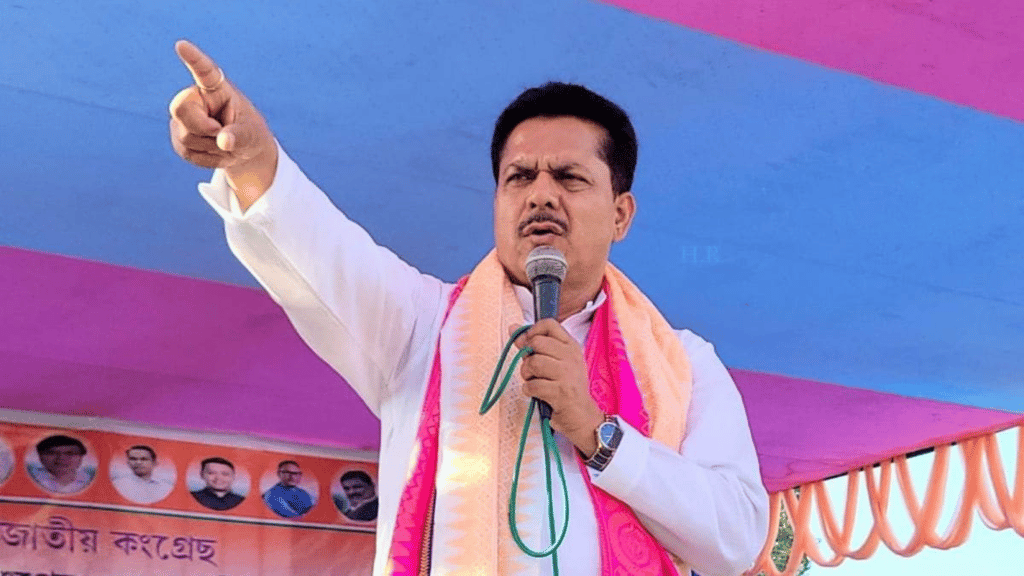
The resignation of senior leader Bhupen Kumar Borah from the Indian National Congress has sent shockwaves through Assam’s political landscape, just months ahead of the 2026 Assembly elections.
While Borah’s resignation letter did not directly name individuals, political observers point to a prolonged internal power shift within the Assam Pradesh Congress Committee (APCC) that may have set the stage for his exit.
Leadership Transition and Changing Equations
The turning point came in May 2025, when Borah was replaced as APCC president by Gaurav Gogoi, Member of Parliament from Jorhat. The move was officially described as an organizational restructuring aimed at strengthening the party ahead of state elections. However, the transition also marked a significant redistribution of influence within the Assam Congress. Borah, who had served as state president since 2021, had built a strong grassroots organizational network. His tenure focused heavily on district mobilization and opposition coordination. The appointment of Gogoi signaled a strategic reset and a generational shift backed by the party’s central leadership.
Emergence of a New Power Structure
Following the leadership change, an inner circle of senior leaders and close confidants of Gaurav Gogoi like Rakibul Hussain began playing a more prominent role in organisational and strategic matters. Party insiders suggest that decision-making became more centralised under the new leadership framework. According to some internal sources, in an incident just for asking about Elizabeth, Gaurav Gogoi’s wife, his goon squad attacked Bhupen Bora and his supporters. Whenever he is asked about Elizabeth Gogoi’s alleged Pakistan connection, Gaurav becomes aggressive. He even threatened Bhupen Bora.
Key areas reportedly affected included:
● District-level restructuring
● Campaign planning
● Alliance negotiations with regional parties
Though no public confrontation surfaced, sources within the party have acknowledged that differing approaches to strategy and internal coordination created discomfort among sections of the leadership.
Alliance Talks and Internal Strain
As preparations intensified for the 2026 Assembly elections, alliance negotiations became a crucial focal point. Control over seat-sharing discussions and candidate selection often defines political leverage within party structures. Observers note that while Borah remained active in political outreach, the final authority in negotiations increasingly rested with the reorganized state leadership. Such shifts, common during leadership transitions, can alter internal power balances. In Assam Congress, this recalibration appears to have deepened factional undercurrents.
The Resignation
On 16 February 2026, Borah formally resigned from the Congress. In his statement, he indicated dissatisfaction with his role and suggested that he was not being accorded adequate importance within the state unit. The resignation comes at a sensitive moment for the party, which is attempting to consolidate opposition forces ahead of a crucial electoral contest.
Political Implications
Borah’s exit raises several immediate questions:
● Will the leadership transition consolidate the Gogoi camp’s authority further?
● Could this weaken the party’s grassroots mobilization capacity before the polls?
While the Congress has yet to issue a detailed public response addressing internal dynamics, the development underscores the challenges political parties face when balancing generational change with organizational continuity.
For now, the Assam Congress appears to be navigating both an electoral battle and an internal recalibration — simultaneously.
Contact
Reach out for news tips or inquiries.
Phone
+91-6003712563
© 2025. All rights reserved.