
Into the Dark: How Oil Tanker ‘Shenlong’ Braved a Digital Blackout to Reach India Amid US-Iran War
WORLD
3/13/20262 min read
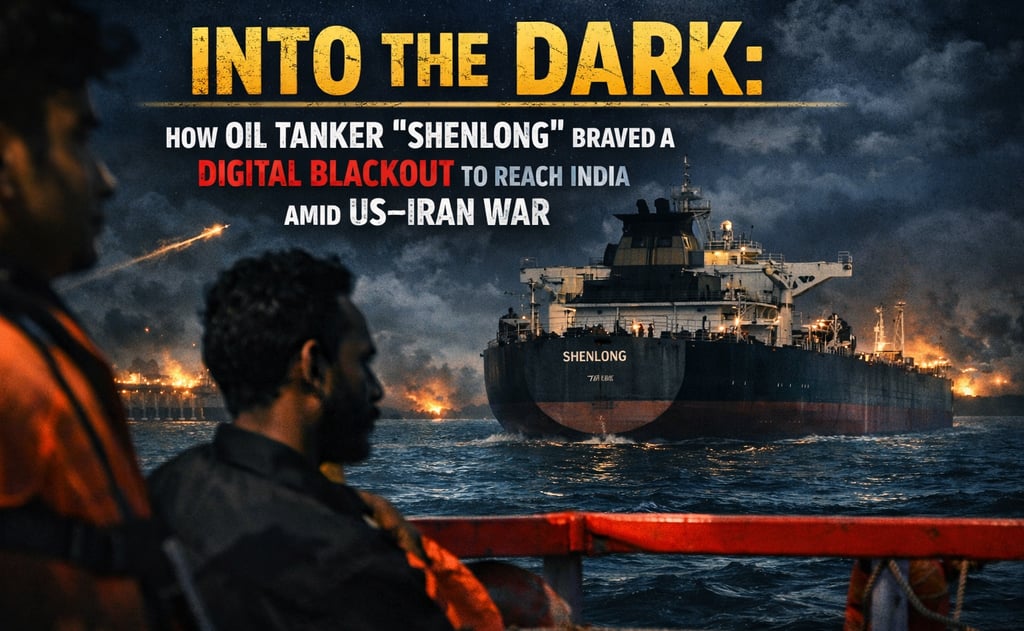
MUMBAI – In a remarkable feat of old-school seamanship, the Liberia-flagged oil tanker Shenlong Suezmax successfully docked at Mumbai’s Jawahar Dweep on Wednesday, becoming the first vessel to deliver Middle Eastern crude to India through the Strait of Hormuz since the outbreak of the US-Iran conflict on February 28.
The journey, which began at the Ras Tanura terminal in Saudi Arabia on March 3, serves as a harrowing reminder of the volatility currently gripping the world’s most vital energy corridor.
Navigating a 'Digital Void'
As the Shenlong approached the 33-km-wide Strait of Hormuz—a chokepoint through which 20% of the world’s oil passes—the crew was thrust into a "digital blackout." According to maritime sources, the ship encountered sustained GPS spoofing and jamming, a tactic of electronic warfare that renders modern satellite navigation useless or dangerously misleading.
To avoid becoming a target in the crossfire of the ongoing drone and missile war, the vessel also disabled its Automatic Identification System (AIS) transponders. For nearly 48 hours, the 135,335-tonne tanker went "dark," disappearing from global tracking monitors.
A Return to Traditional Seamanship
With electronic aids dead, Captain Sukshant Singh Sandhu and his crew of 29—comprising Indian, Pakistani, and Filipino nationals—were forced to rely on manual navigation techniques from a pre-digital era.
"The ship lost GPS signals many times along the way," Captain Sandhu told reporters. Second Officer Abhijit Alok added that the bridge team reverted to "secondary options," navigating the treacherous, war-torn waters using the same skills seasoned officers used before the age of satellites.
While fighter jets roared overhead and the glow of distant explosions lit the horizon, the crew remained steadfast. "The captain assured us we would be alerted during an emergency," said Third Officer Osman Arshad, a Pakistani national who plans to take a four-month break to "work off the stress" of the voyage.
Energy Security Concerns
The Shenlong’s arrival is a critical relief for India, which has seen growing panic over LPG and fuel supplies since the conflict began. However, the victory is bittersweet. While this vessel made it through, the Ministry of Shipping confirmed that three Indian seafarers have died and one remains missing following attacks on other foreign-flagged vessels in the region.
The Indian government has now established a 24-hour control room to monitor 28 Indian-flagged vessels currently in the Persian Gulf. Plans are reportedly in place to provide naval escorts for 22 priority ships if the security situation continues to deteriorate.
What’s Next?
The Shenlong is scheduled to depart for Fujairah, UAE, on Friday night after discharging its cargo into Mumbai’s refineries. The maritime community remains on high alert as the Strait of Hormuz effectively remains a theatre of war, with Iran maintaining tight control over the passage following the February 28 strikes.
As of Friday, Gujarat’s Deendayal Port (Kandla) is bracing to handle 22 more vessels over the next 72 hours, many carrying the crude oil India desperately needs to keep its economy running amidst the West Asian crisis.
Contact
Reach out for news tips or inquiries.
Phone
+91-6003712563
© 2025. All rights reserved.